Table of Content
Artificial intelligence is transforming how businesses use CRM systems. However, not all AI works the same way. In fact, the shift from traditional AI to agentic AI is changing how organizations automate processes, make decisions, and interact with customers inside Dynamics CRM.
In this guide, you will clearly understand the difference between agentic AI and traditional AI in Dynamics CRM, how each works, and which approach delivers better results for modern businesses.
What is Traditional AI in Dynamics CRM
Traditional AI in Dynamics CRM focuses on predefined rules, historical data, and predictive models. It helps businesses automate repetitive tasks and generate insights based on past behavior.
For example, traditional AI can:
- Predict customer churn
- Recommend products based on previous purchases
- Score leads using historical data
However, it follows fixed logic. Therefore, it cannot adapt independently beyond its training.
Key Characteristics of Traditional AI
- Relies on structured data and predefined models
- Works within fixed workflows
- Requires human input for updates and improvements
- Focuses on prediction rather than action
As a result, it improves efficiency but still depends heavily on human intervention.
What is Agentic AI in Dynamics CRM
Agentic AI represents the next evolution. It does not just analyze data. Instead, it acts independently, makes decisions, and continuously improves without constant human input.
In Dynamics CRM, agentic AI behaves like a smart assistant that can plan, execute, and optimize tasks in real time.
For instance, agentic AI can:
- Automatically engage with leads based on behavior
- Adjust workflows dynamically
- Make decisions based on real time data
- Learn and improve continuously
Therefore, it shifts CRM systems from passive tools to active decision makers.
Key Differences Between Agentic AI and Traditional AI
Understanding the difference is essential for choosing the right approach. The table below highlights the major distinctions.
| Feature | Traditional AI | Agentic AI |
|---|---|---|
| Decision Making | Based on predefined rules | Autonomous and dynamic |
| Learning Ability | Static and periodic updates | Continuous learning |
| Action Capability | Suggests actions | Executes actions independently |
| Adaptability | Limited | Highly adaptive |
| Human Dependency | High | Low |
| CRM Role | Support tool | Intelligent agent |
Clearly, agentic AI offers more flexibility and intelligence compared to traditional AI.
How Agentic AI Enhances Dynamics CRM
Agentic AI transforms Dynamics CRM from a data system into an intelligent ecosystem. As a result, businesses can automate complex processes and improve customer engagement.
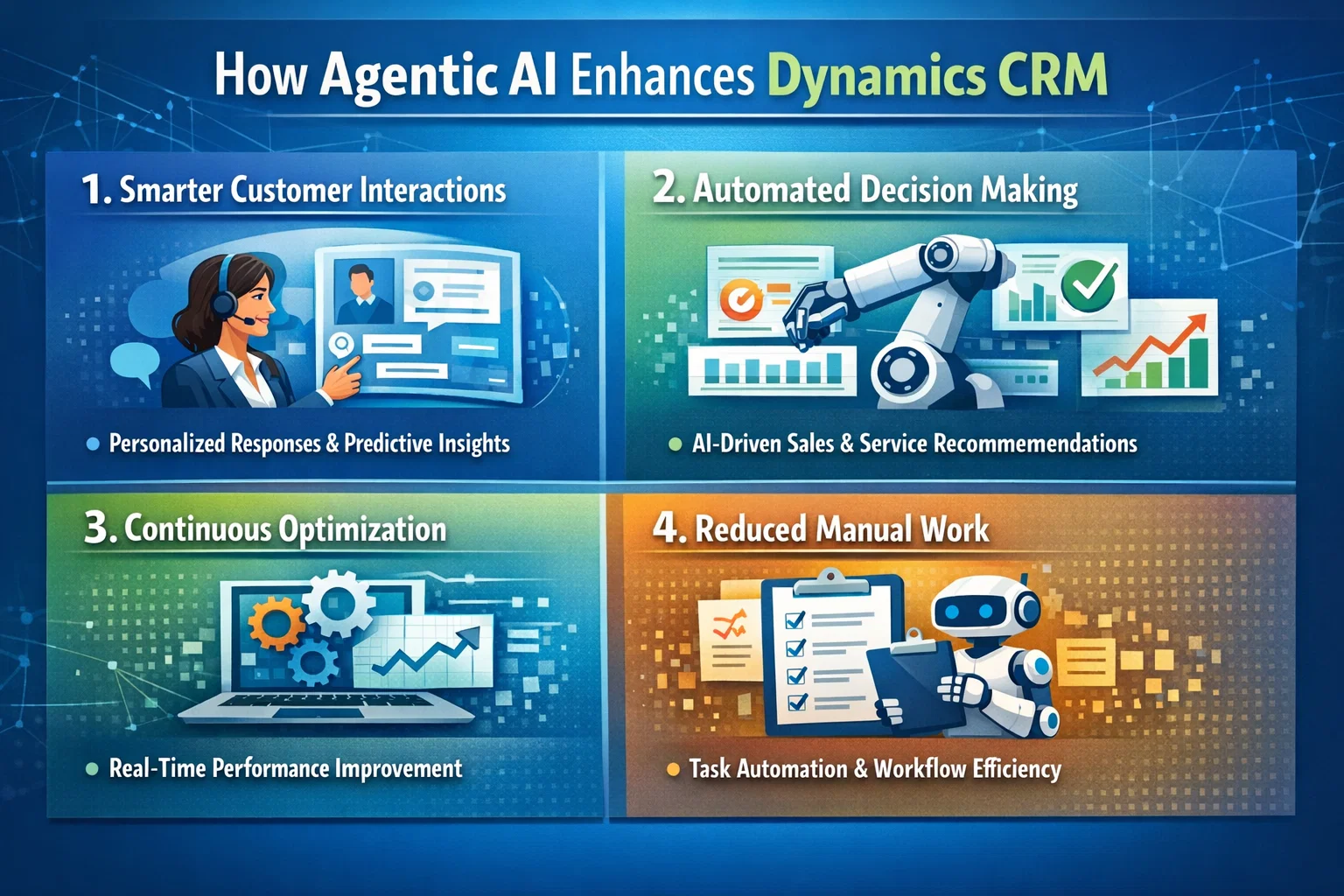
1. Smarter Customer Interactions
Agentic AI analyzes behavior in real time. Then it responds instantly with personalized actions. This leads to better customer experiences.
2. Automated Decision Making
Instead of waiting for user input, agentic AI takes action. For example, it can assign leads, trigger campaigns, or escalate issues automatically.
3. Continuous Optimization
Unlike traditional AI, agentic systems learn continuously. Therefore, CRM performance improves over time without manual adjustments.
4. Reduced Manual Work
Because the system acts independently, teams spend less time on repetitive tasks. As a result, productivity increases significantly.
Limitations of Traditional AI in CRM
Although traditional AI is useful, it has several limitations.
- It cannot adapt to sudden changes in customer behavior
- It requires frequent retraining
- It only provides recommendations instead of taking action
- It depends on structured data
Therefore, businesses using only traditional AI may struggle to keep up with dynamic market demands.
When to Use Agentic AI vs Traditional AI
Choosing the right approach depends on your business needs.
Use Traditional AI When
- You need basic automation
- Your workflows are stable
- You rely heavily on historical data
Use Agentic AI When
- You want real time decision making
- Your business environment changes frequently
- You need intelligent automation at scale
In most modern CRM environments, a combination of both works best. However, agentic AI provides a clear competitive advantage.
Role of Dynamics CRM in AI Adoption
Dynamics CRM already integrates powerful AI capabilities. However, integrating agentic AI takes it to the next level.
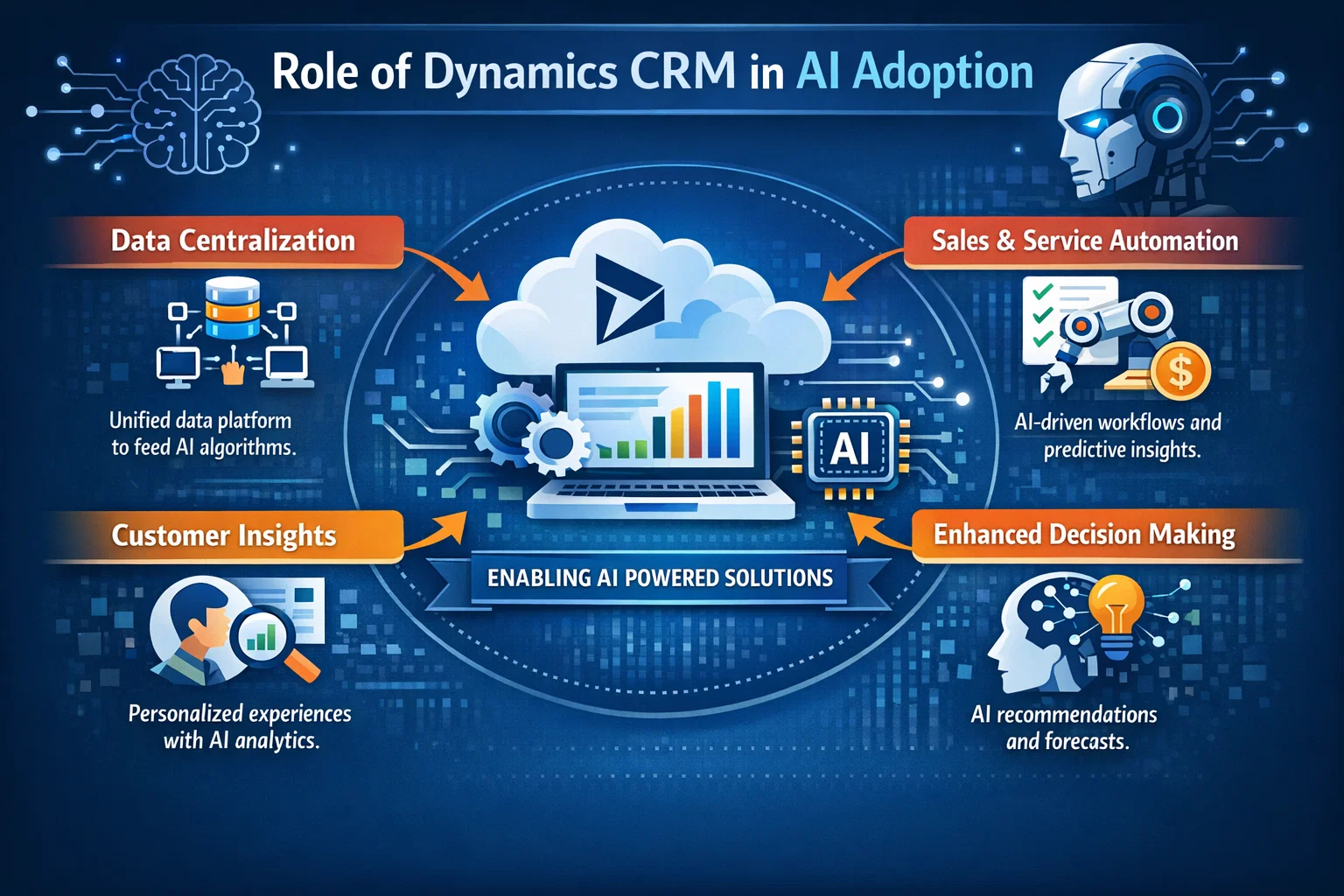
With the right implementation, businesses can:
- Automate entire customer journeys
- Improve sales forecasting accuracy
- Enhance customer support with intelligent agents
- Optimize marketing campaigns dynamically
Therefore, CRM becomes a proactive system rather than a reactive one.
How Sky Soft Connections Helps You Implement AI in Dynamics CRM
Implementing AI in CRM requires expertise. This is where Sky Soft Connections delivers real value.
Sky Soft Connections provides tailored solutions that help businesses integrate both traditional and agentic AI into Dynamics CRM.
Key Services Include
- Custom Dynamics CRM development
- AI powered automation solutions
- Power Platform integration including Power Apps and Power Automate
- Data analytics and reporting with Power BI
- CRM optimization and workflow automation
Moreover, their team ensures that your system is scalable, efficient, and aligned with your business goals.
As a result, you can unlock the full potential of AI driven CRM.
Benefits of Adopting Agentic AI in Dynamics CRM
Switching to agentic AI offers several advantages.
- Faster decision making
- Improved customer engagement
- Higher operational efficiency
- Reduced human error
- Continuous system improvement
Therefore, businesses can stay ahead in a competitive market.
Future of AI in Dynamics CRM
The future clearly leans toward agentic AI. As technology evolves, CRM systems will become more autonomous and intelligent.
In the coming years, we can expect:
- Fully automated customer journeys
- Self optimizing CRM workflows
- AI driven business strategies
Therefore, adopting agentic AI today prepares your business for tomorrow.
Conclusion
Traditional AI laid the foundation for automation in Dynamics CRM. However, agentic AI is taking it further by enabling systems to think, act, and improve independently.
While traditional AI focuses on insights, agentic AI focuses on action. As a result, businesses gain faster outcomes, better efficiency, and smarter customer engagement.
If you want to stay competitive, integrating agentic AI into your Dynamics CRM is no longer optional. With expert support from Sky Soft Connections, you can transform your CRM into a powerful intelligent system that drives real business growth.
Read more : multi org dynamics 365 architecture
FAQ’s
Agentic AI can act independently and make decisions, while traditional AI mainly provides insights based on predefined rules.
Yes, with proper customization and integration, Dynamics CRM can support agentic AI capabilities.
Agentic AI is more advanced and flexible. However, combining both often delivers the best results depending on business needs.
 is a software solution company that was established in 2016. Our quality services begin with experience and end with dedication. Our directors have more than 15 years of IT experience to handle various projects successfully. Our dedicated teams are available to help our clients streamline their business processes, enhance their customer support, automate their day-to-day tasks, and provide software solutions tailored to their specific needs. We are experts in Dynamics 365 and Power Platform services, whether you need Dynamics 365 implementation, customization, integration, data migration, training, or ongoing support.