Table of Content
- What Is a Modular CRM Architecture?
- Why Modular CRM Architecture Matters
- Core Components of a Modular CRM System
- Benefits of Modular CRM for Different Industries
- Best Practices for Implementing Modular CRM Architecture
- How Skysoft Connections Helps You Build Modular CRM Systems
- Modular CRM vs Monolithic CRM: Quick Comparison
- Future Trends in Modular CRM Architecture
- Conclusion
- Frequently Asked Questions (FAQs)
In today’s fast-moving digital landscape, businesses need CRM systems that evolve as quickly as their customers do. Modular CRM architectures offer exactly that flexibility. Instead of relying on rigid, monolithic platforms, modular CRM design allows you to build, scale, and customize your system as your business grows.
In this guide, we’ll explore how modular CRM architectures work, why they matter, and how businesses can implement them successfully—especially with expert support from Skysoft Connections.
What Is a Modular CRM Architecture?
A modular CRM architecture is a system design approach where CRM functionality is broken into independent, interchangeable modules. Each module performs a specific function such as:
- Sales automation
- Customer service
- Marketing campaigns
- Reporting & analytics
- Workflow automation
Because these modules are loosely coupled, you can easily add, remove, or upgrade components without disrupting the entire system.
Key Characteristics of Modular CRM Systems
| Feature | Description | Business Impact |
|---|---|---|
| Flexibility | Modules can be added or removed as needed | Adapt to changing business needs |
| Scalability | System grows with your organization | Handle more users and data efficiently |
| Integration-Friendly | Easily connects with third-party tools | Seamless data flow across systems |
| Customization | Tailor modules to your processes | Better user adoption and ROI |
Why Modular CRM Architecture Matters
Businesses are no longer static. Therefore, your CRM shouldn’t be either.
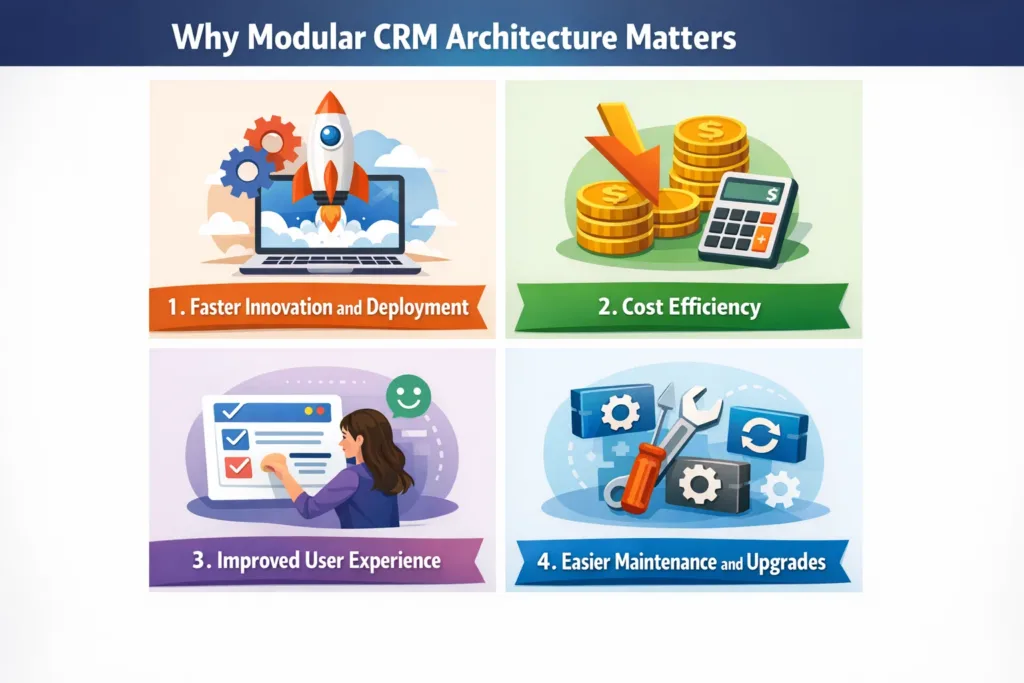
1. Faster Innovation and Deployment
With modular architecture, you can roll out new features quickly. For instance, you can introduce AI automation or analytics modules without rebuilding your entire CRM.
2. Cost Efficiency
Instead of investing in one large system, you can deploy only the modules you need. As a result, your upfront investment is lower and more predictable.
3. Improved User Experience
Because each module focuses on a specific task, employees find the system easier to use. Consequently, adoption rates increase.
4. Easier Maintenance and Upgrades
Since modules are independent, updates can be applied individually. Therefore, system downtime is minimized.
Core Components of a Modular CRM System
A well-designed modular CRM typically includes the following core modules:
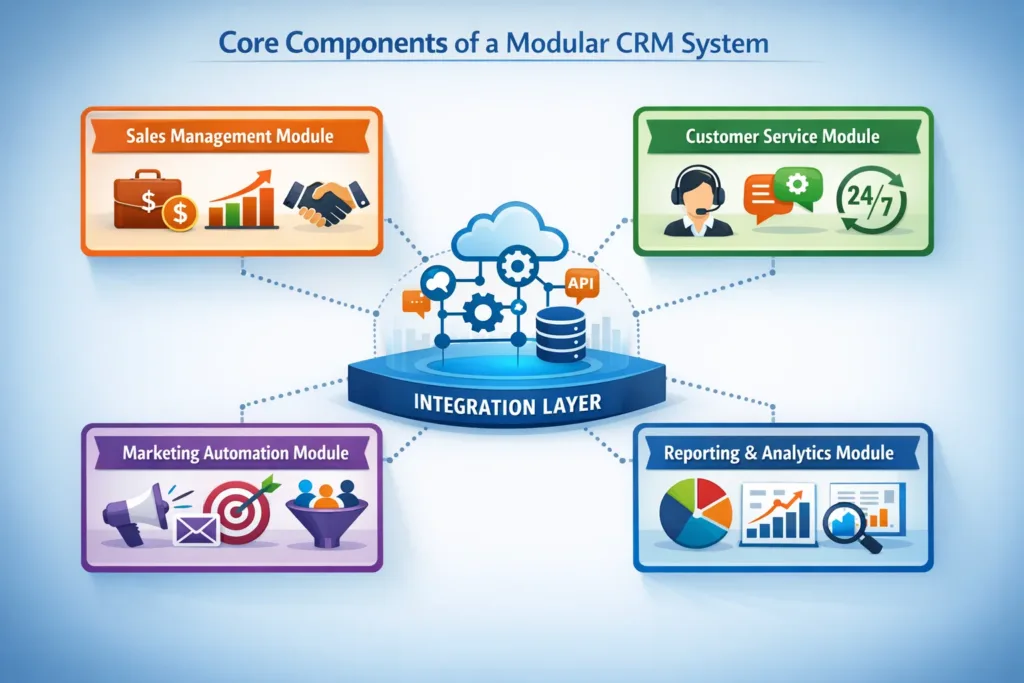
Sales Management Module
- Lead tracking
- Opportunity management
- Pipeline visualization
Customer Service Module
- Ticketing system
- SLA tracking
- Knowledge base integration
Marketing Automation Module
- Email campaigns
- Customer segmentation
- Campaign performance tracking
Reporting & Analytics Module
- Real-time dashboards
- Sales forecasts
- Customer insights
Integration Layer
- API connectivity
- Third-party system integration
- Data synchronization
Benefits of Modular CRM for Different Industries
Different industries benefit uniquely from modular CRM systems.
For Oil & Gas & Field Services
- Asset tracking modules
- Inspection and compliance integrations
- Real-time reporting dashboards
For Retail & E-commerce
- Customer behavior analytics
- Marketing automation
- Omnichannel customer support
For Service-Based Businesses
- Workflow automation
- Customer lifecycle management
- Performance tracking dashboards
Best Practices for Implementing Modular CRM Architecture
To ensure a successful implementation, follow these proven best practices:
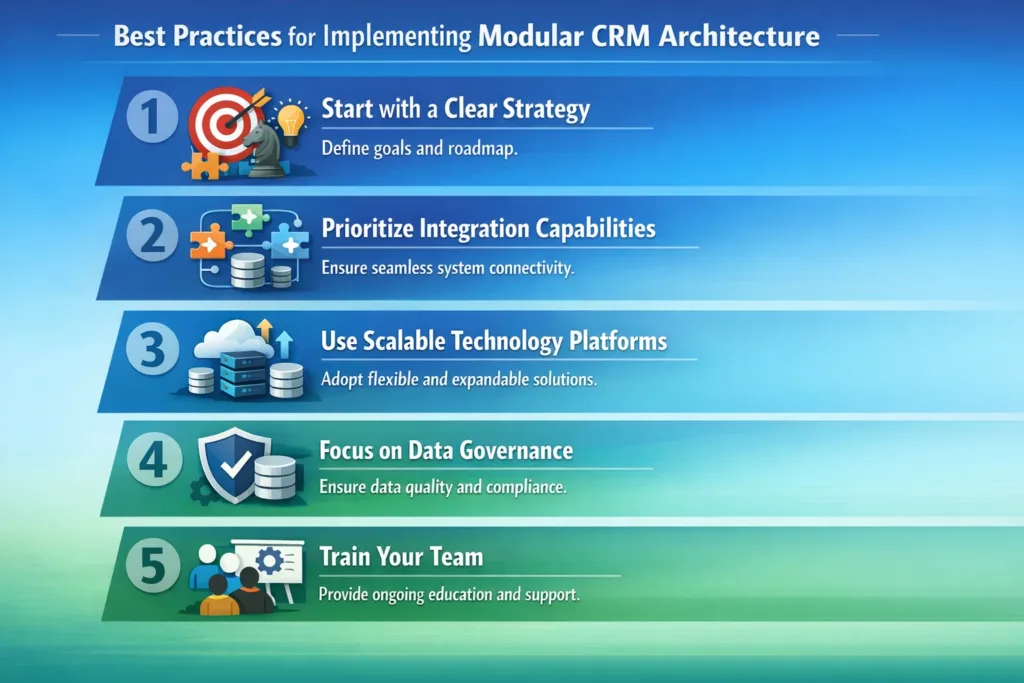
1. Start with a Clear Strategy
First, define your business goals. Then align CRM modules with those goals.
2. Prioritize Integration Capabilities
Ensure your CRM integrates smoothly with ERP, marketing tools, and other systems.
3. Use Scalable Technology Platforms
Choose platforms like Microsoft Dynamics 365 and Power Platform to support modular expansion.
4. Focus on Data Governance
Since multiple modules handle data, consistent data policies are essential.
5. Train Your Team
Even the best system fails without user adoption. Therefore, provide ongoing training and support.
How Skysoft Connections Helps You Build Modular CRM Systems
Implementing a modular CRM architecture requires both strategy and technical expertise. This is where Skysoft Connections delivers real value.
Their Core CRM Services Include:
- Microsoft Dynamics 365 CRM implementation
- Power Platform development (Power Apps, Power Automate, Power BI)
- Custom module development tailored to your business
- Integration with third-party systems and legacy platforms
- Data migration and system architecture design
Why Choose Skysoft Connections?
- 40,000+ hours of successful project delivery
- 100% success rate on Upwork (Top Rated Plus)
- Deep expertise in CRM, automation, and inspection systems
- Industry-specific solutions for oil & gas, service, and enterprise sectors
As a result, businesses can build CRM ecosystems that are flexible, scalable, and future-ready.
Modular CRM vs Monolithic CRM: Quick Comparison
| Feature | Modular CRM | Monolithic CRM |
|---|---|---|
| Flexibility | High | Low |
| Customization | Easy | Limited |
| Upgrade Process | Independent modules | System-wide updates |
| Integration | API-driven | Often restricted |
| Scalability | On-demand | Difficult to scale |
Clearly, modular CRM provides a more adaptable and cost-effective solution.
Future Trends in Modular CRM Architecture
As technology evolves, modular CRM systems will continue to improve.
Key Trends to Watch
- AI-powered CRM modules
- Low-code/no-code customization
- Cloud-native microservices architecture
- Real-time data synchronization
- Advanced predictive analytics
Therefore, businesses that adopt modular CRM early will gain a significant competitive advantage.
Conclusion
Modular CRM architectures are transforming how businesses manage customer relationships. Because they offer flexibility, scalability, and cost efficiency, they are becoming the preferred choice for modern organizations.
By leveraging the expertise of Skysoft Connections, companies can implement modular CRM systems that are tailored to their workflows and built for long-term success.
If your business is ready to move beyond rigid CRM systems, now is the perfect time to embrace a modular approach.
Frequently Asked Questions (FAQs)
A modular CRM system is built with independent components that can be added, removed, or customized without affecting the entire system.
Yes. In fact, small businesses benefit from modular CRM because they can start small and scale as they grow.
Because you only invest in the modules you need, costs are lower and productivity increases—leading to better ROI.
Yes. Most modular CRM systems are API-driven and integrate easily with ERP, marketing, and analytics platforms.
 is a software solution company that was established in 2016. Our quality services begin with experience and end with dedication. Our directors have more than 15 years of IT experience to handle various projects successfully. Our dedicated teams are available to help our clients streamline their business processes, enhance their customer support, automate their day-to-day tasks, and provide software solutions tailored to their specific needs. We are experts in Dynamics 365 and Power Platform services, whether you need Dynamics 365 implementation, customization, integration, data migration, training, or ongoing support.