Table of Content
- What is Event-Driven Architecture?
- The Problem with “On Save” Triggers
- Why Event-Driven Architecture is Better
- Event-Driven vs “On Save” Triggers
- Common Use Cases of Event-Driven Architecture
- How Event-Driven Architecture Works
- Best Practices for Implementing EDA
- Challenges of Event-Driven Architecture
- Transitioning from “On Save” to Event-Driven Systems
- The Future: Event-Driven + Cloud + AI
- How Sky Soft Connections Can Help
- Conclusion
- FAQ’s
In today’s fast-paced digital ecosystem, relying solely on traditional “On Save” triggers is no longer enough. Businesses now demand real-time responsiveness, scalability, and flexibility—and that’s exactly where Event-Driven Architecture (EDA) comes into play.
This blog explores how event-driven systems work, why they outperform legacy trigger-based approaches, and how you can leverage them to build smarter, more efficient applications.
What is Event-Driven Architecture?
Event-Driven Architecture (EDA) is a design pattern where system components communicate through events. An event is simply a change in state—such as a user action, system update, or data modification.
Instead of waiting for a record to be saved, systems react instantly to events as they happen.
Key Components of EDA
- Event Producers → Generate events (e.g., user submits a form)
- Event Consumers → React to events (e.g., send notification)
- Event Broker → Routes events between producers and consumers
The Problem with “On Save” Triggers
Traditional systems often rely on “On Save” triggers. While simple, they come with limitations:
Limitations
- Delayed execution (only after saving data)
- Limited flexibility in workflows
- Tight coupling between components
- Poor scalability for complex systems
Example
A CRM system updates a customer record. With “On Save”:
- Email is sent only after saving
- Validation happens late
- Other systems are not notified in real time
Why Event-Driven Architecture is Better
Event-driven systems eliminate delays and enable real-time processing.
Key Benefits
- Real-Time Processing – Respond instantly to events
- Loose Coupling – Components work independently
- Scalability – Easily handle high volumes of events
- Flexibility – Add new consumers without changing existing logic
- Improved User Experience – Faster system responses
Event-Driven vs “On Save” Triggers
| Feature | On Save Trigger | Event-Driven Architecture |
|---|---|---|
| Execution Timing | After save only | Real-time (before/after events) |
| Scalability | Limited | Highly scalable |
| Flexibility | Low | High |
| Coupling | Tight | Loose |
| Integration Capability | Restricted | Seamless across systems |
Common Use Cases of Event-Driven Architecture
EDA is widely used across industries. Here are some practical applications:
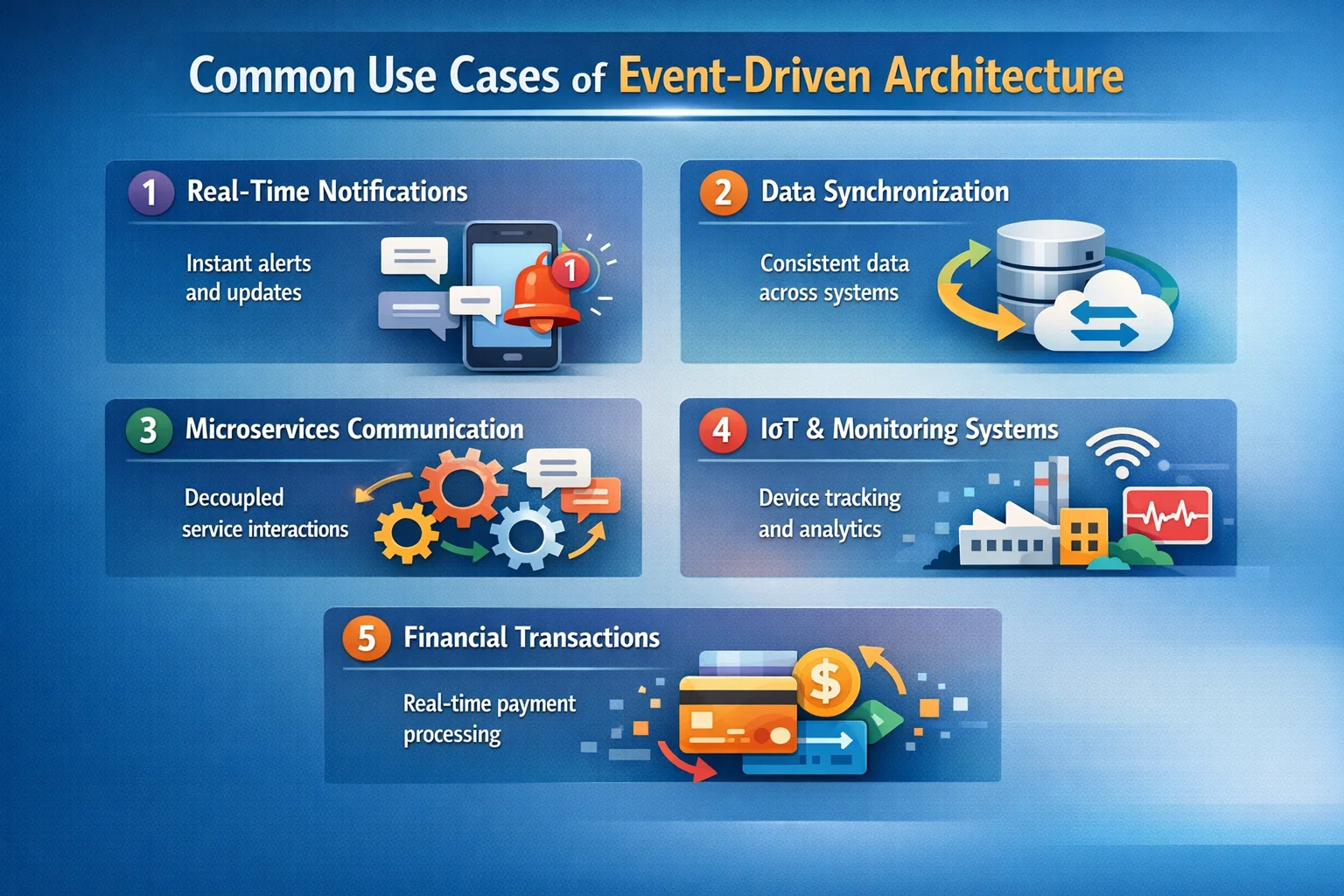
1. Real-Time Notifications
- Trigger emails, SMS, or push notifications instantly
2. Data Synchronization
- Sync data across multiple systems without delay
3. Microservices Communication
- Enable services to communicate asynchronously
4. IoT and Monitoring Systems
- Process sensor data in real time
5. Financial Transactions
- Detect fraud or trigger alerts instantly
How Event-Driven Architecture Works
Let’s break it down step-by-step:
- A user performs an action (e.g., submits a form)
- The system generates an event
- The event is sent to an event broker
- Multiple consumers react to the event simultaneously
- Each consumer performs its task independently
As a result, one event can trigger multiple workflows without delays
Best Practices for Implementing EDA
To fully leverage event-driven systems, follow these best practices:
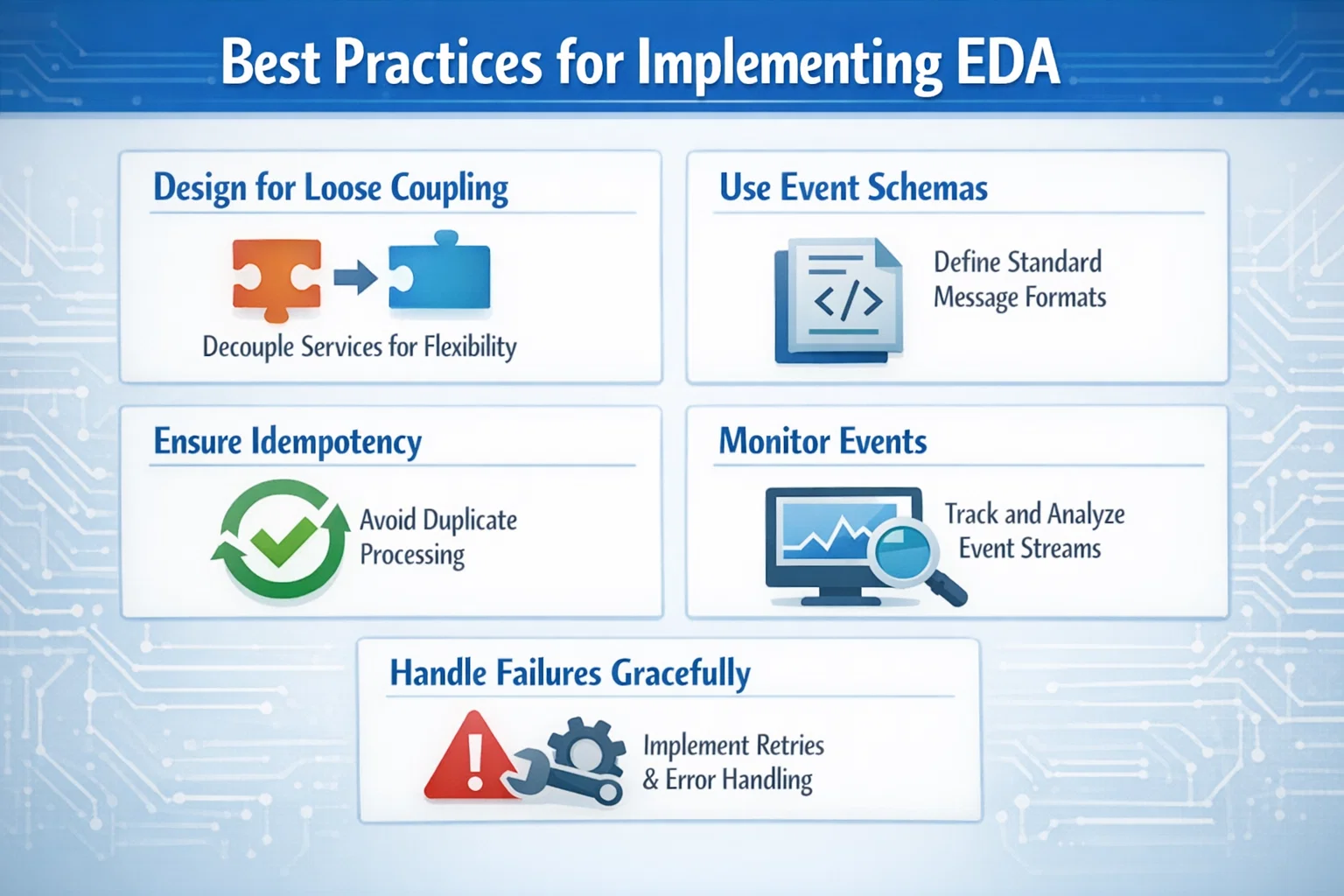
Design for Loose Coupling
Ensure components do not depend on each other directly
Use Event Schemas
Standardize event formats for consistency
Ensure Idempotency
Make sure repeated events don’t cause duplicate actions
Monitor Events
Use logging and analytics to track event flows
Handle Failures Gracefully
Implement retry mechanisms and fallback strategies
Challenges of Event-Driven Architecture
While powerful, EDA comes with its own challenges:
- Complexity in debugging
- Event consistency management
- Increased infrastructure requirements
- Learning curve for teams
However, with proper planning, these challenges can be effectively managed.
Transitioning from “On Save” to Event-Driven Systems
Moving to EDA doesn’t require a complete system overhaul.
Gradual Migration Approach
- Start by identifying critical workflows
- Replace “On Save” triggers with event-based logic
- Introduce event brokers (e.g., message queues)
- Scale progressively
This ensures minimal disruption while maximizing benefits
The Future: Event-Driven + Cloud + AI
Event-driven systems are becoming the backbone of:
- Cloud-native applications
- AI-driven automation
- Real-time analytics platforms
Therefore, adopting EDA today prepares your business for tomorrow.
How Sky Soft Connections Can Help
At Sky Soft Connections, we specialize in building modern, scalable, and event-driven solutions tailored to your business needs.
Our Expertise Includes:
- Microsoft Power Platform (Power Automate, Power Apps)
- Dynamics CRM Customization
- Event-driven workflows and integrations
- Cloud-based architecture design
- Data reporting and real-time dashboards
Why Choose Us?
- Proven experience with enterprise systems
- Custom-built solutions for your workflows
- Focus on automation and efficiency
- End-to-end support and consultation
Whether you’re upgrading from legacy systems or building from scratch, we help you move beyond “On Save” triggers into a smarter, event-driven future.
Conclusion
Event-Driven Architecture is not just a trend—it’s a necessity for modern applications. While “On Save” triggers served their purpose, they simply cannot match the speed, flexibility, and scalability of event-driven systems.
So, if your goal is to build responsive, future-ready applications, now is the time to embrace EDA.
Read more : polymorphism in dataverse
FAQ’s
It enables real-time processing and improves system scalability and flexibility.
Yes, especially if real-time updates or scalability are required.
Yes, a hybrid approach can be used during the transition phase.
 is a software solution company that was established in 2016. Our quality services begin with experience and end with dedication. Our directors have more than 15 years of IT experience to handle various projects successfully. Our dedicated teams are available to help our clients streamline their business processes, enhance their customer support, automate their day-to-day tasks, and provide software solutions tailored to their specific needs. We are experts in Dynamics 365 and Power Platform services, whether you need Dynamics 365 implementation, customization, integration, data migration, training, or ongoing support.