For many years, the term “automation” in the ERP sector referred to rigid workflows: If X occurs, then perform Y. However, with the introduction of Copilot—a useful tool that can summarize meetings or draft emails upon request—the landscape has shifted. Yet, the evolution continues.
At Microsoft Ignite 2024 and through subsequent updates in 2025, Microsoft unveiled autonomous agents within Dynamics 365. Unlike basic chatbots that require a prompt, these agents are engineered to “think” and operate on their own. They do not merely propose a response; they carry out comprehensive business processes from beginning to end.
This change is particularly significant in the Order-to-Cash (O2C) cycle. Here’s how autonomous agents are advancing from mere assistance to complete operational independence.
From “Chatting” to “Doing”: What Makes Agents Different?
To grasp the transition, we need to examine the progression from Generative AI to Agentic AI:
- The Copilot (Assistant): Reactive. You request it to “summarize this customer’s credit history,” and it generates a paragraph.
- The Autonomous Agent: Proactive. It oversees an inbox, detects an incoming order, verifies real-time inventory, checks the customer’s credit limit, and generates the sales order in Dynamics 365—all while you enjoy your morning coffee.
These agents function within established boundaries. You set the logic, the data sources (such as Dataverse or SharePoint), and the “hand-off” points where human intervention is necessary.
Order Intake: The Sales Order Agent
The O2C cycle frequently encounters bottlenecks right at the start due to disorganized and unstructured data. Orders come in through PDF attachments, email body text, or outdated portals.
The Sales Order Agent in Dynamics 365 (Business Central and SCM) employs sophisticated reasoning to:
- Extract and Validate: It interprets the “unstructured” email and aligns it with your product catalog.
- Identify Mismatches: If a customer places an order for a SKU that is unavailable or uses an old price, the agent does not simply generate an error. Instead, it can search for a suitable alternative or compose a clarification email for the salesperson to review.
Risk Mitigation: The Supplier & Credit Agents
Before an order is finalized, it is essential to manage risk. Previously, this involved a credit manager manually assessing “blocked” orders.
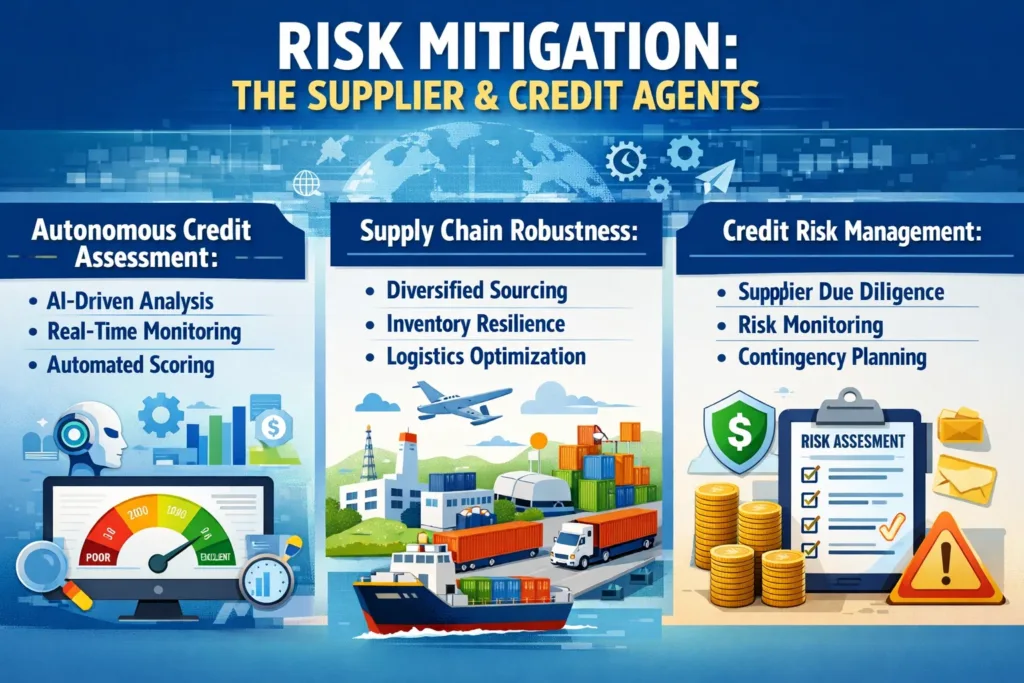
Autonomous Credit Assessment:
- Agents are now able to observe external credit indicators and internal payment records. When a significant order is placed by a trustworthy customer, the agent can independently raise a temporary limit or authorize the release based on established criteria.
Supply Chain Robustness:
- Should the order-to-cash (O2C) process be jeopardized by a delay in raw materials, the Supplier Communications Agent intervenes. It monitors supplier commitments and, upon detecting a delay, promptly alerts the sales team to modify the customer’s “Order Promising” date before it escalates into a complaint.
Closing the Loop: Automated Reconciliation
The “Cash” component of Order-to-Cash is well-known for being highly manual. Reconciling bank statements with invoices frequently requires a team of accountants searching for transaction IDs.
- Financial Reconciliation Agent: This agent operates behind the scenes in Dynamics 365 Finance to match and clear transactions. It autonomously manages the “noise” created by bank fees or slight currency fluctuations, only bringing to attention the 5% of “true” exceptions that need human intervention.
Read more : ai agents for order to cash automation efficiency
The Strategic Payoff: Why This Matters
Transitioning the O2C cycle to an agentic model allows businesses to not only save time but also enhance liquidity and foster customer loyalty.
| Feature | Traditional Automation | Autonomous Agents |
| Trigger | Manual or Event-based | Context-based (e.g., “An email arrived”) |
| Decision Making | Hard-coded rules | Reasoning based on data & goals |
| Handling Errors | Stops the process | Attempts to resolve or drafts a solution |
| Efficiency | High for simple tasks | High for complex, multi-step workflows |
Summary
The article emphasizes how Microsoft Dynamics 365 is evolving from basic AI assistants to autonomous agents that actively oversee the Order-to-Cash (O2C) cycle.
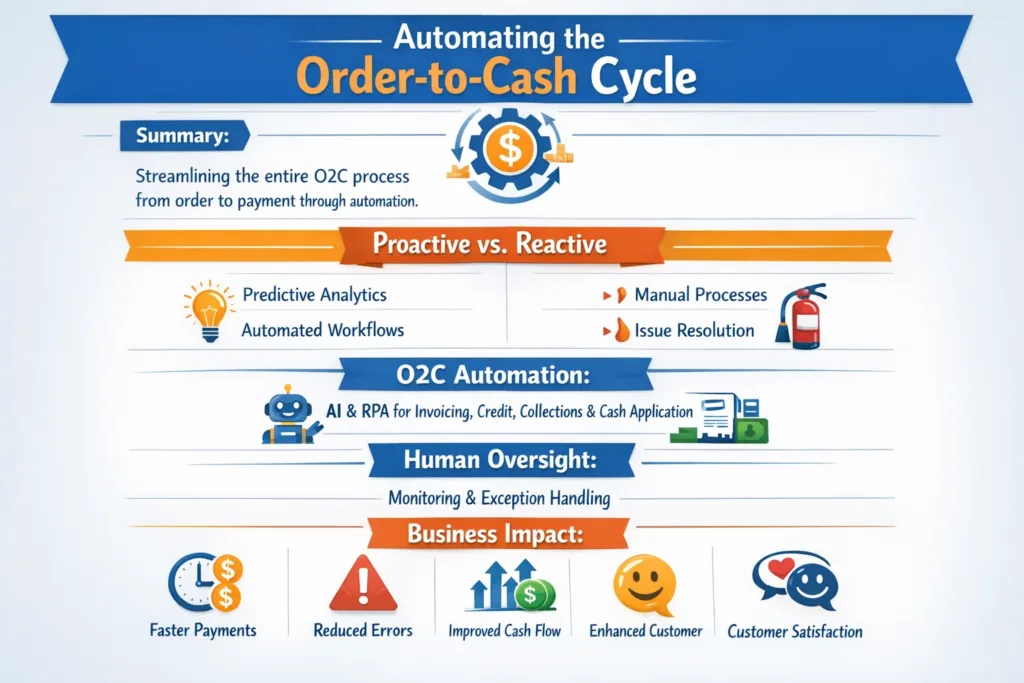
Key points:
- Proactive vs. Reactive: In contrast to conventional Copilots that await commands, autonomous agents are capable of independent thought and action to accomplish multi-step tasks.
- O2C Automation: They enhance the process by pulling data from disorganized emails, assessing credit risks, and automatically reconciling bank statements.
- Human Oversight: These agents function within the “guardrails” established in Copilot Studio, escalating only complex issues to human operators.
- Business Impact: This transformation minimizes manual data entry, accelerates fulfillment, and enhances overall liquidity.
Conclusion
Autonomous agents in Dynamics 365 are redefining how businesses handle the Order-to-Cash cycle. By moving from reactive assistance to proactive action, these agents streamline workflows, reduce errors, and free teams to focus on strategic decisions. The future of ERP automation is here—smarter, faster, and more autonomous.
Read more : preventing spam emails in dynamics 365 easily
FAQ’s
It’s an AI-driven tool that can independently execute multi-step business processes, unlike traditional assistants that only respond to prompts.
They handle order intake, credit assessment, supplier communication, and financial reconciliation automatically, reducing manual work and errors.
Yes, agents operate within defined guardrails and escalate only complex or exceptional cases to human operators.
Absolutely. They can reason based on real-time data, established logic, and organizational goals, making them highly flexible and efficient.
 is a software solution company that was established in 2016. Our quality services begin with experience and end with dedication. Our directors have more than 15 years of IT experience to handle various projects successfully. Our dedicated teams are available to help our clients streamline their business processes, enhance their customer support, automate their day-to-day tasks, and provide software solutions tailored to their specific needs. We are experts in Dynamics 365 and Power Platform services, whether you need Dynamics 365 implementation, customization, integration, data migration, training, or ongoing support.